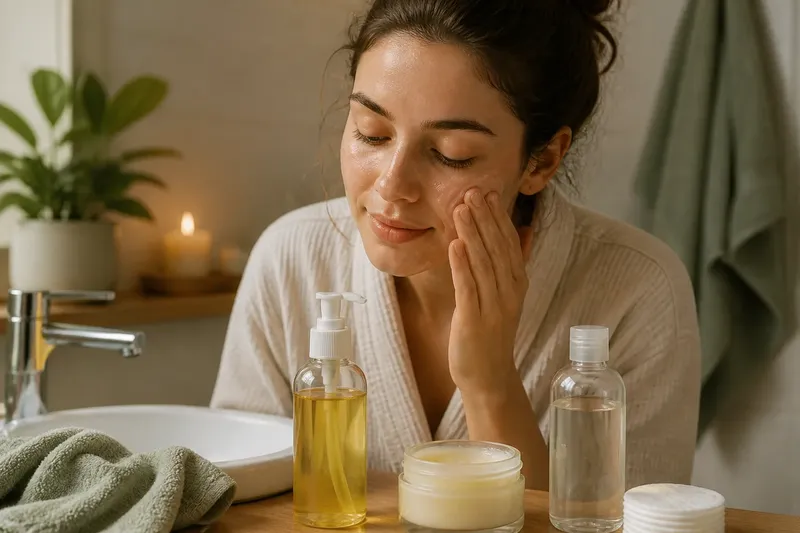
The Flawless-Skin Image Is an Image, Not a Baseline
Flawless-skin images rely on lighting, framing and retouching. Learn to spot those choices and judge your own appearance more fairly.
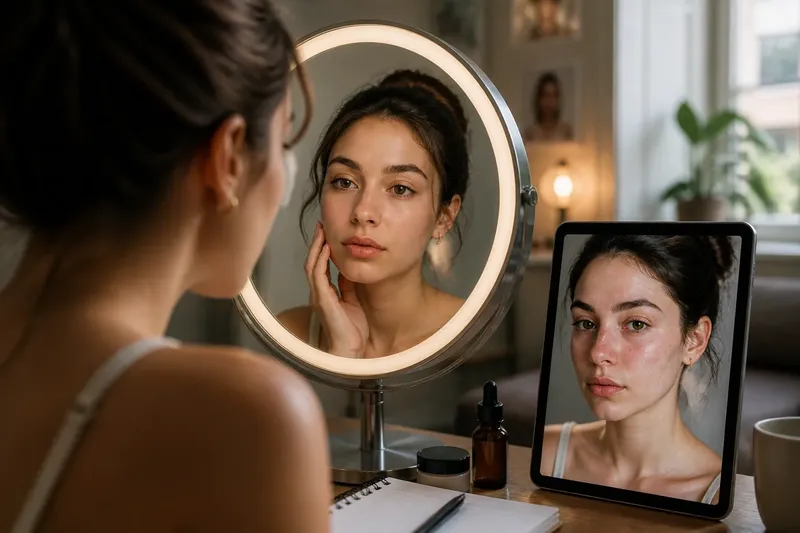
The most common mistake with flawless-skin images is treating them as neutral evidence of what skin should look like. That comparison can make ordinary texture seem like a problem to correct. A polished beauty image is an arranged picture: light, lens, pose and editing all shape what reaches your screen.
What does the light leave out?
Soft, broad light smooths the appearance of shadows. A face near a large window, facing a pale wall or lit through a diffuser will often look more even than the same face under a bare ceiling bulb. The difference is not necessarily a change in the skin; it is a change in how light and shadow describe it.
Small, direct light sources can make pores, fine lines and raised texture cast sharper shadows. Soft light can mute those shadows, while bright frontal light may flatten contours. Neither arrangement is a complete account of a face. Each is a choice about which details to emphasise.
When an image feels impossibly smooth, look at the catchlights in the eyes, the softness of shadows beneath the nose and chin, and whether the background is evenly lit. These clues cannot tell you exactly what equipment was used, but they can remind you that the appearance is partly a lighting effect.
Compare like with like only if the comparison is useful: a softly lit portrait is not a fair opponent for a close-up beneath a harsh bathroom light.
How does framing change the face?
A camera does not simply record a face from nowhere. Distance, angle, focal length and crop affect its proportions and the amount of skin shown. A close lens can exaggerate features nearest to it; a flattering angle can soften a jawline or shift attention towards the eyes. A tight crop may remove the room, the shoulders and any context that would make the portrait feel less immaculate.
Beauty imagery also relies on selection. A creator may choose one frame from many, then crop away a blink, a stray hair or a patch of shine. That does not make the chosen frame fraudulent. It does make it a selected moment, rather than a full record of how a person looks across a day.
Say you see a close-up with no visible background and a smooth, evenly lit cheek. Imagine the same person photographed at arm’s length beside a window, with the camera level and the whole face in view. The second image may show more texture and variation; that observable difference says something about framing and light, not that one face is real and the other is not.
What can retouching change?
Editing ranges from ordinary colour correction to detailed alteration. A creator might adjust white balance so skin looks warmer, lift shadows to even out the image, or remove temporary marks. More extensive retouching can reduce pores, reshape features, alter skin tone or blur the boundary between skin and hair.
Some signs are visible: softened texture that continues across areas with different lighting, edges that look warped, or an earring or hair strand that appears oddly blurred. But subtle editing can be difficult to identify from a finished image alone. A smooth result is not proof of retouching, just as visible texture does not prove that an image is unedited.
It helps to separate the picture’s purpose from its appearance. A campaign image may be designed to create a polished mood; a tutorial may use close framing to show product placement; a personal post may still have colour adjustments. Ask what the image is meant to communicate before taking it as a standard for your own skin.
Why does a constructed image feel like a baseline?
Repeated images can make a particular look feel ordinary, especially when the same smooth finish appears in adverts, filters and social feeds. The trouble is that repetition can conceal the work behind the image. A carefully chosen angle and a layer of editing may become hard to notice precisely because they are familiar.
Skin also changes with expression, weather, sleep, hormones, age and the time of day. It can have pores, redness, freckles, fine lines, shine or dry patches without those features telling a simple story about health or care. A still portrait freezes one instant and leaves the rest outside the frame.
Try naming the image-making choices before judging your own face: soft light, close crop, even tone, selected frame. That small pause shifts the question from “Why don’t I look like this?” to “What did the picture leave out?”
What should you ask when a beauty image feels too perfect?
Can lighting make skin look smoother?
Yes. Broad, soft light can reduce the contrast of small shadows, so texture appears less pronounced. It changes the way details register rather than erasing them from the face.
Does a close-up show what skin usually looks like?
Not by itself. A close-up magnifies details and removes the wider setting, while a chosen frame records only one moment. Treat it as a view of skin under particular conditions, not a portrait of every ordinary day.
Can I tell whether a photo has been retouched?
Sometimes visible irregularities around edges or unusually uniform texture can raise questions, but a finished image rarely reveals the full editing process. Avoid treating a guess about retouching as certainty.
How can I compare images more fairly?
Notice differences in light, camera distance, angle and editing before comparing skin. For a more grounded view, use a familiar mirror or an unfiltered photo in ordinary, comfortable light rather than chasing a studio image’s conditions.
What is a fairer way to read the image?
Keep the distinction between appearance and evidence clear. A beauty image can show a style, a mood or a product’s visual presentation; it cannot set a universal baseline for skin. If you are deciding whether a product suits you, look for clear information about its intended use and consider your own needs rather than assuming the pictured finish is a promise.
The next time a flawless-skin image catches your eye, notice the light first, then the crop, then the signs of editing. That brief reading gives the picture its proper scale: a crafted image, not a verdict on your face.